
No-code automation helps users with automated workflows, applications, and systems without writing any line of code. It uses visual builders and pre-built integrations to simplify repetitive tasks. Top platforms in 2026 include Zapier for app integrations, Gen6 for AI-powered business automation, and Airtable for database-driven workflow management. No-code tools help organisations save time, lower costs, and scale operations efficiently.
What is No-Code Automation?
No-code automation is an efficient method of building systems with the help of visual interfaces instead of programming languages. Think of it like generating with digital blocks. You use no-code software tools like drag-and-drop builders and pre-built templates to tell your apps how to talk to each other.
It’s essential to differentiate it from the “low code.” While low code still requires its technical knowledge, “no code” is designed for nearly everyone. Whether you are in marketing, finance, or HR, you can use these tools to connect your CRM, email, and project management boards. For UAE businesses, this erases the struggle of finding specialised developers for every small internal project.
Why Businesses Are Moving Away From Coded Automation
In the past, automation was a luxury. It required expensive developers, months of coding, and massive budgets. Most small to medium businesses simply couldn’t access it through. Nowadays, the change is so clear: companies want to develop automated workflows without coding.
In the UAE, businesses move faster than the developer talent pool can grow; “no code” bridges the gap. Operations managers and HR leads, hence, need to know their workflows better than any developer ever could.
How Does No-Code Automation Work?
The core logic of no-code workflow automation is simple: Trigger → Action → Result.
Think of a new lead who fills out a form on your website (the Trigger). The no-code platform instantly creates a record in your CRM, sends a welcome email, and pings your sales team on WhatsApp (the Actions). This all happens in seconds, without a human lifting a finger (the Result).
These platforms use visual builders where you can draw out these steps. You can even add “filters” or “conditions.” For instance: “If the lead is from Dubai, assign them to the Dubai sales team; if they are from abroad, send them to the international team.”
A real estate agency in Dubai can use this to send instant WhatsApp follow-ups at all times through new inquiries all the time, with their response time ranging from four hours to just four minutes.
Which Workflows Can You Automate Without Coding?
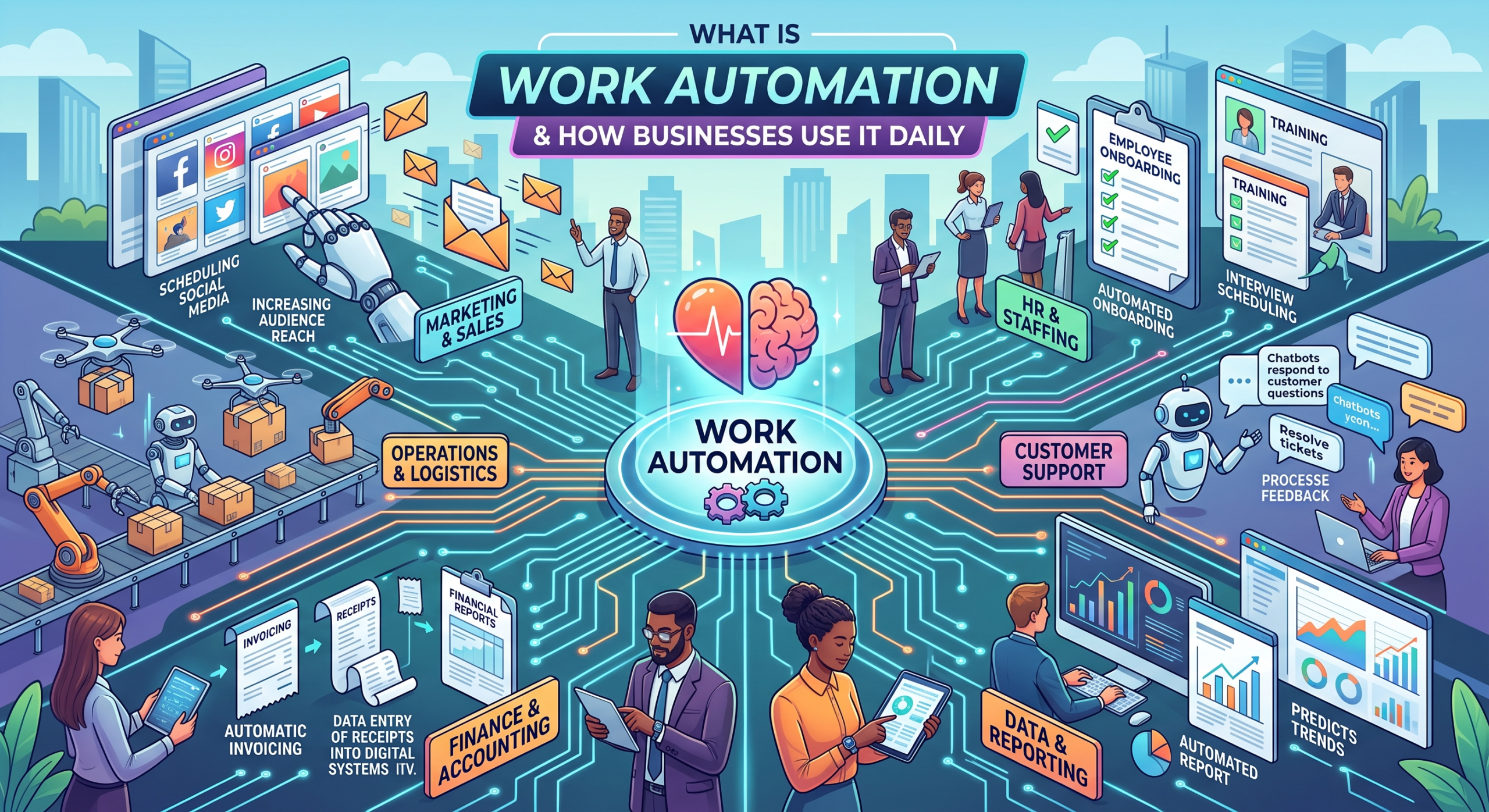
You can easily use the business automation tools to manage almost any repetitive administrative task. Here is a practical look at what you can nearly automate across various departments:
- Lead Management: Get ahead with the leads, use them for the right person, and send follow-up sequences.
- Onboarding: Send welcome kits, collect documents, and manage the tasks for upcoming team members.
- Invoicing and Payments: Generate invoices, send reminders, and update your payment records automatically.
- Social Media: Schedule and publish posts from multiple platforms on a set timeline.
- Customer Support: Route the tickets, send acknowledgement emails ahead of urgent cases.
- Inventory: Trigger reorder notifications whenever stock levels drop below a certain point.
No-code automation can simplify workflows such as email marketing, lead management, data entry, customer onboarding, reporting, and task management. By automating repetitive processes, businesses improve efficiency, minimise errors, and focus more on strategic growth.
Benefits of No-Code Automation for Businesses
Switching to no-code platforms and no-code software tools often provides a large number of immediate advantages:
- Speed: Workflows that used to take weeks to build now take hours.
- Cost: You save on developer fees and long-term maintenance costs.
- Flexibility: If your company’s process changes, you can update the workflow yourself in minutes with no IT ticket required.
- Error Reduction: Automated systems don’t get tired or make errors. A professional services firm in Abu Dhabi saved 15 hours per week just by automating its client onboarding.
- Accessibility: Any team member can develop through what they require, regardless of their technical problems.
When the busywork is automated, teams can focus on customers, delivery, and growth instead of chasing approvals and updating spreadsheets.
Best No-Code Automation Platforms in 2026
No code automation platforms in 2026 are empowering businesses to build powerful workflows without relying on complex programming.
| Tool | Best For | Key Strength |
| Zapier | Teams connecting multiple existing apps | Supports 6,000+ integrations with simple “if this, then that” logic |
| Airtable | Teams managing complex data and workflows | Combines database functionality with built-in automation |
| Gen6 | UAE & Middle East businesses | Arabic support, UAE compliance, regional pricing, and local workflow templates |
The best no-code automation platform is the one that aligns with your business goals, technical comfort level, and scalability needs.
Is No-Code Automation Right for Startups?
Absolutely. In fact, startups often benefit more from AI-powered no-code platforms than larger organisations. When you’re operating with a small team of five people, you typically don’t have the time or budget to hire developers for internal tools.
Most entry-level plans cost under $30 per month, far less than even a single hour of a developer’s time. Gen6 Intelligence enables startups to automate workflows, manage operations efficiently, and scale faster without technical complexity.
As a result, startups can operate like well-structured, larger companies from the very beginning.
Conclusion
In 2026, no-code automation has become one of the fastest ways for individuals and teams to save time because it helps you connect through apps, move data, and run workflows without needing developers for every little update. Get started with one or two repeatable workflows, bring the time savings, then expand gradually as your processes become more organised and consistent.
FAQs
What is no-code automation?
A: It is a special way for businesses to build automated workflows along with the visual tools instead of programming. Everyone can easily connect apps and set up the responsibilities without having a technical background.
How does no-code automation work?
A It works on a “trigger and action” system. When something happens, the platform automatically performs a set of actions.
What are the best no-code automation platforms in 2026?
A: Zapier is another great tool for connecting different apps, Airtable is best for data-driven work, and Gen6 is the top choice for UAE businesses needing local support and compliance.
Can businesses automate workflows without coding?
A: Yes. Modern platforms enable any team member to build full workflows thoroughly, from onboarding to invoicing, using visual builders. No developers are needed.
What are the benefits of no-code automation tools?
A: They make businesses faster, reduce human error, and save money on developers. Most teams save 10–20 hours a week by automating their routine tasks.
Is no-code automation suitable for startups?
A: It’s perfect for startups. It allows startups to run like large business cooperations by automating their operations for a very low monthly cost.