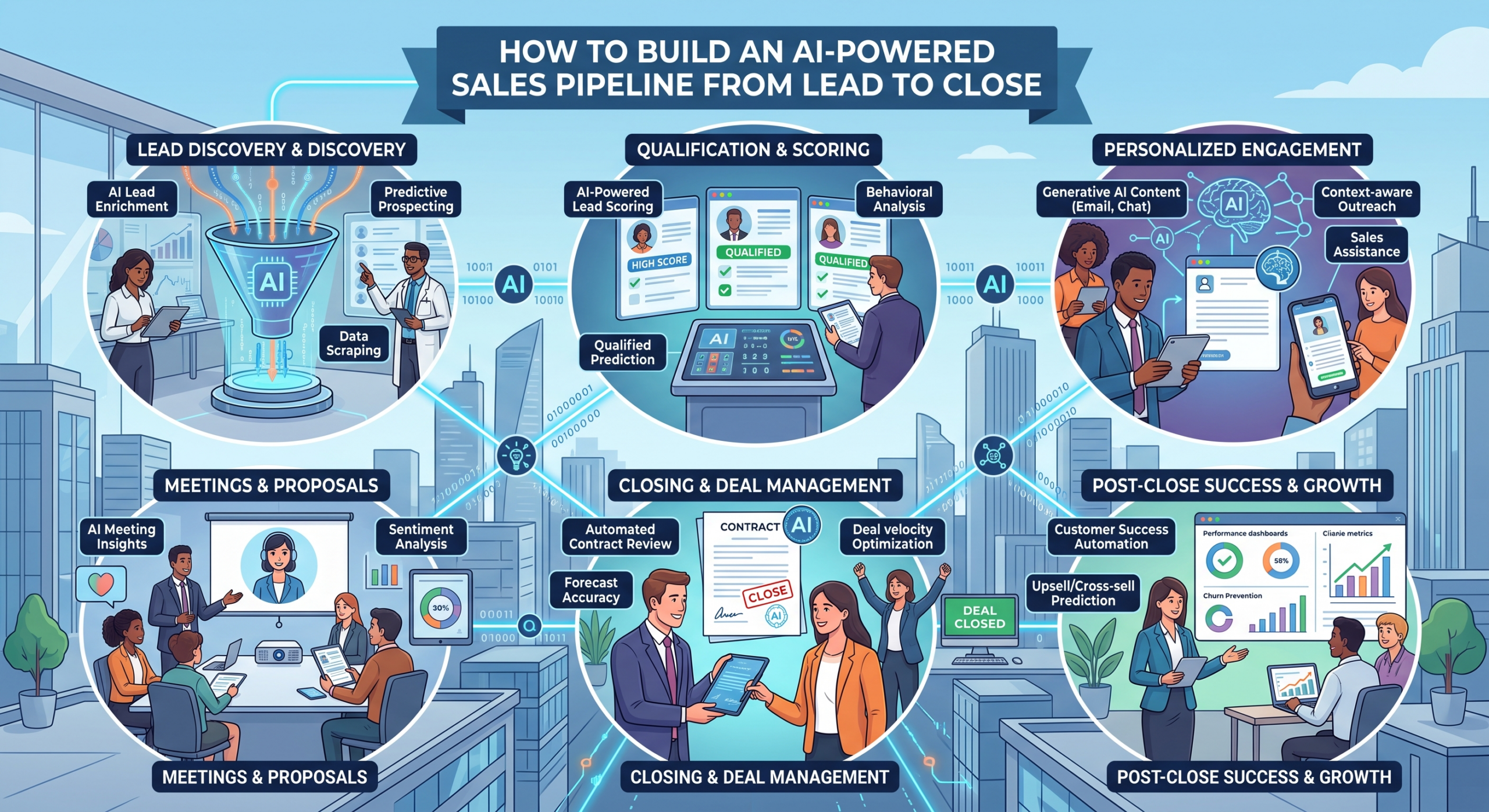
An AI sales pipeline uses automation and machine learning to move a lead through four stages capture, score, nurture, and close with minimal manual work. Sales pipeline automation tools like Gen6 connect your forms, CRM, and outreach channels so leads are qualified and routed the moment they arrive, cutting response time from hours to seconds. AI for sales ensures your reps spend time only on high-value prospects.
Creating an AI sales pipeline removes busywork, makes responses faster, and increases sales. It automates four main steps: quickly getting leads, ranking them using smart data, helping interested customers based on their actions, and speeding up sales. This data-driven strategy ensures that there is no administrative friction, allowing you to focus solely on buying clients.
Why Sales Teams Are Moving to AI-Powered Pipelines
Speed and consistency define modern revenue teams. Manual procedures will make your reps slower, less efficient, and may even cause prospects to lose interest fast.
- Instant Speed-to-Lead: Leads reached within five minutes have much higher conversion rates than those contacted after hours.
- Zero Manual Data Entry: With automation, all activities go directly into the CRM and save your reps 1-2 hours every day.
- Consistent Follow-Up: Behavior-based triggers ensure that no leads are ignored regardless of how busy the sales reps are.
- Data-Driven Direction: AI looks at engagement data to help sellers know which account to contact next.
To get a better idea of how to manage these triggers in different areas, check out AI Marketing Automation to learn how to synchronize your messaging across all customer touchpoints.
The 4-Stage AI Sales Pipeline at a Glance
Transitioning to a smart architecture transforms your sales process from being reactive and manual to proactive and data-driven. Here’s how it works in the various stages of the sales pipeline:
| Stage | What Happens | AI’s Role |
| 1. Capture | Lead fills out a web form, chats with a bot, or engages with an ad | Auto-captures and enriches contact data in real-time |
| 2. Score | Lead is evaluated against ICP fit and real-time intent signals | Algorithmic model ranks leads by likelihood to close |
| 3. Nurture | Lead receives tailored follow-up assets and outreach | Personalizes outreach timing, messaging, and channels |
| 4. Close | Deal moves through evaluation, proposal, and contract stages | Flags stalled deals and auto-drafts targeted follow-ups |
Stage 1 Capture: Automated Lead Generation
A strong pipeline starts with clear and quick data input. Automated lead generation links online forms, chat tools, and ad networks directly to your main customer management system.
- Instant Data Enrichment: Background workflows append company size, technology used, and intentions as soon as a form is filled out.
- Real-Time Routing: Automated rules send interested sales leads to account managers right away, while general questions are added to follow-up tracks.
- Zero Drop-off: Leveraging AI for sales gathers all incoming inquiries without having to go through your email inbox.
See how you can make your incoming emails easy to manage using automated lead generation software that won’t miss any potential client.
Stage 2 Score: AI Sales Automation for Lead Prioritization
Using AI sales automation for lead scoring removes personal biases from sales reps. Algorithms look at a person’s background and their recent actions to figure out how likely they are to buy something.
- Predictive Ranking: Models analyze what people do, like visiting pricing pages or downloading content, to give leads a score based on these actions.
- Dynamic Prioritization: Sales pipeline automation sends the best leads directly to the sales team and other leads to automatic follow-ups.
- Focused Selling: Utilization of predictive analytics enables reps to focus on those prospects who have a genuine interest in purchasing.
Prioritizing the right opportunities guarantees that your team spends their precious time only on prospects with strong intentions.
Stage 3 Nurture: Sales Lead Automation That Feels Personal
Generic email blasts usually don’t lead to sales with today’s buyers. Sales lead automation measures engagement actions that activate automated, multi-channel communication efforts based on those actions.
- Behavior-Driven Triggers: Sales process automation triggers messages through interactions rather than waiting for time-specific intervals to elapse.
- AI-Drafted Follow-ups: Language engines create outreach drafts for representatives, which blend both humans and AI in sales efforts.
- Multi-Channel Consistency: Sequences are created for emails, chats, and social media communications while avoiding manual planning.
If you want to grow your business, a sales lead automation with AI will assist you in maintaining personalization while scaling.
Stage 4 Close: Lead-to-Close Automation
Executing lead-to-close automation keeps late-stage deals moving smoothly toward signature. System monitors identify friction points and handle administrative steps automatically.
- Stalled Deal Detection: Tools to detect stalled deals and notify your sales team what to do next.
- Document Workflow Automation: System rules for reminding you about proposals and e-signature requests.
- CRM Data Hygiene: Leveraging smart updates refreshes pipeline stages and revenue metrics automatically upon deal completion.
For a broader perspective on how these tools align with your existing processes, read our guide on what is CRM sales and marketing automation to see how they integrate into a unified revenue engine.
AI Sales Pipeline vs Manual Pipeline: What Changes
Moving to an automated architecture completely transforms the nature of daily activity by switching from disconnected actions to systematic execution.
| Feature / Process | Manual Sales Pipeline | AI-Powered Sales Pipeline |
| Lead Response Time | Hours to days | Seconds to minutes |
| Lead Scoring Accuracy | Subjective rep judgment | Data-driven predictive modeling |
| Follow-Up Cadence | Manual, inconsistent | Dynamic, behavior-triggered |
| Stalled Deal Detection | Periodic manual reviews | Automated real-time alerts |
| Rep Admin Burden | Heavy data entry | Fully automated sync |
Tools That Power an AI Sales Pipeline
To create a successful system, you need to use different technologies that work well together.
- CRM (System of Record): Core platforms like HubSpot, Salesforce, or Pipedrive store your central data.
- Orchestration Layer: Connects forms, landing pages, and ad channels directly into your CRM.
- AI Scoring & Intelligence (Gen6): Dynamically enriches, ranks, and assigns incoming opportunities.
- Outreach Execution: Delivers multi-channel communication based on prospect interaction.
How Gen6 Helps You Build One
Gen6 unifies capture, scoring, nurture, and closing tasks into a single seamless operating system. Designed for rapid deployment without complex engineering requirements, Gen6 works directly alongside your existing CRM infrastructure to remove pipeline friction and accelerate revenue velocity.
Conclusion
Streamlining your sales process with the help of an AI-driven pipeline helps get rid of administrative hindrances and quickens your revenue generation process. With automated lead capturing, lead scoring, nurturing, and closing processes, your team is free to concentrate only on relationship building. Use these smart tips today to grow your business effectively.
Gen6 is the ultimate choice because it seamlessly automates your entire AI sales pipeline to accelerate revenue growth.
FAQs
1. How do you build an AI-powered sales pipeline?
Integrate automated capture, predictive scoring, and behavioral nurturing seamlessly into your existing CRM.
2. What are the stages of an automated sales pipeline?
The core stages include lead capture, predictive scoring, personalized nurturing, and automated deal closing.
3. How does AI improve lead conversion?
AI ensures instant follow-ups, prioritizes high-intent buyers, and personalizes outreach automatically.
4. Can AI automate the entire sales process?
AI automates administrative tasks and outreach, but human reps remain essential for closing deals.
5. What’s the difference between a sales funnel and a sales pipeline?
A funnel tracks the buyer’s journey, while a pipeline outlines the seller’s specific actions.
6. How does AI score and qualify leads?
Algorithms analyze demographic fit and behavioral signals to rank prospects by their likelihood to close.