Task automation is changing business operations thanks to the use of AI agents. With more tasks being added and making manual efforts harder, firms are turning to AI to help them manage their work processes. While traditional task automation techniques allowed firms to avoid repetition of certain tasks, they often face challenges in situations where there is any change. In contrast, AI agents in business provide flexibility, smart decision-making, and quick actions, which help processes become stronger and more adaptable.
What Is AI Workflow Management: And Why It Matters in 2026
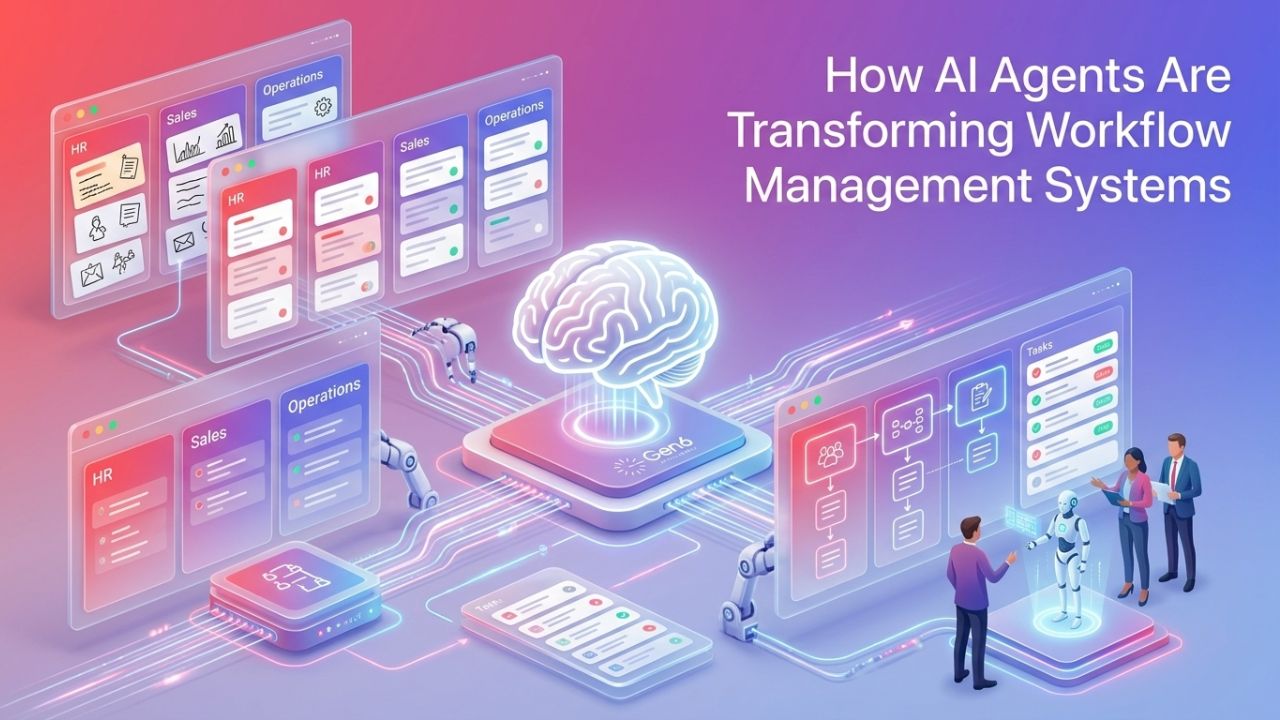
AI workflow management is a system that organizes and automates tasks using intelligent decision-making. Unlike older systems, it doesn’t rely only on fixed rules. Instead, it uses AI tools to automatically manage tasks as they come up and supports AI process automation across systems.
- Traditional workflows have fixed, clear steps to follow.
- Any change can mess up the whole process.
- AI agents watch data, make choices, and change quickly as needed.
This change is important in 2026 because companies need systems that can deal with unpredictability, especially through AI process automation. Teams can’t rely on doing things by hand or always watching for problems anymore. Gen6 Intelligence lets you easily explain a process in everyday language, and the system will create it for you automatically. This saves you time and effort while improving workflow automation tools adoption across teams.
AI Agents vs Traditional Automation: The Key Difference
AI process automation goes beyond simple triggers. Most workflow automation tools operate on “if-this-then-that” logic, but AI agents bring reasoning into the process.
| Feature | Traditional Automation | AI Agents |
| Logic | Fixed rules | Rules + reasoning |
| Flexibility | Breaks easily | Adapts automatically |
| Setup | Technical skills required | Simple language input |
| Exceptions | Cannot handle well | Makes decisions |
| Learning | Static | Improves over time |
The simplest way to explain this is that traditional automation works in much the same way as a vending machine: pick an item and get the same thing back each time. However, when it comes to AI agents in business, they work as assistants who know your goal and how to achieve it.
How AI Agents Improve Workflows in Business
AI agents in business make repetitive and time-consuming tasks automatic using workflow automation tools.
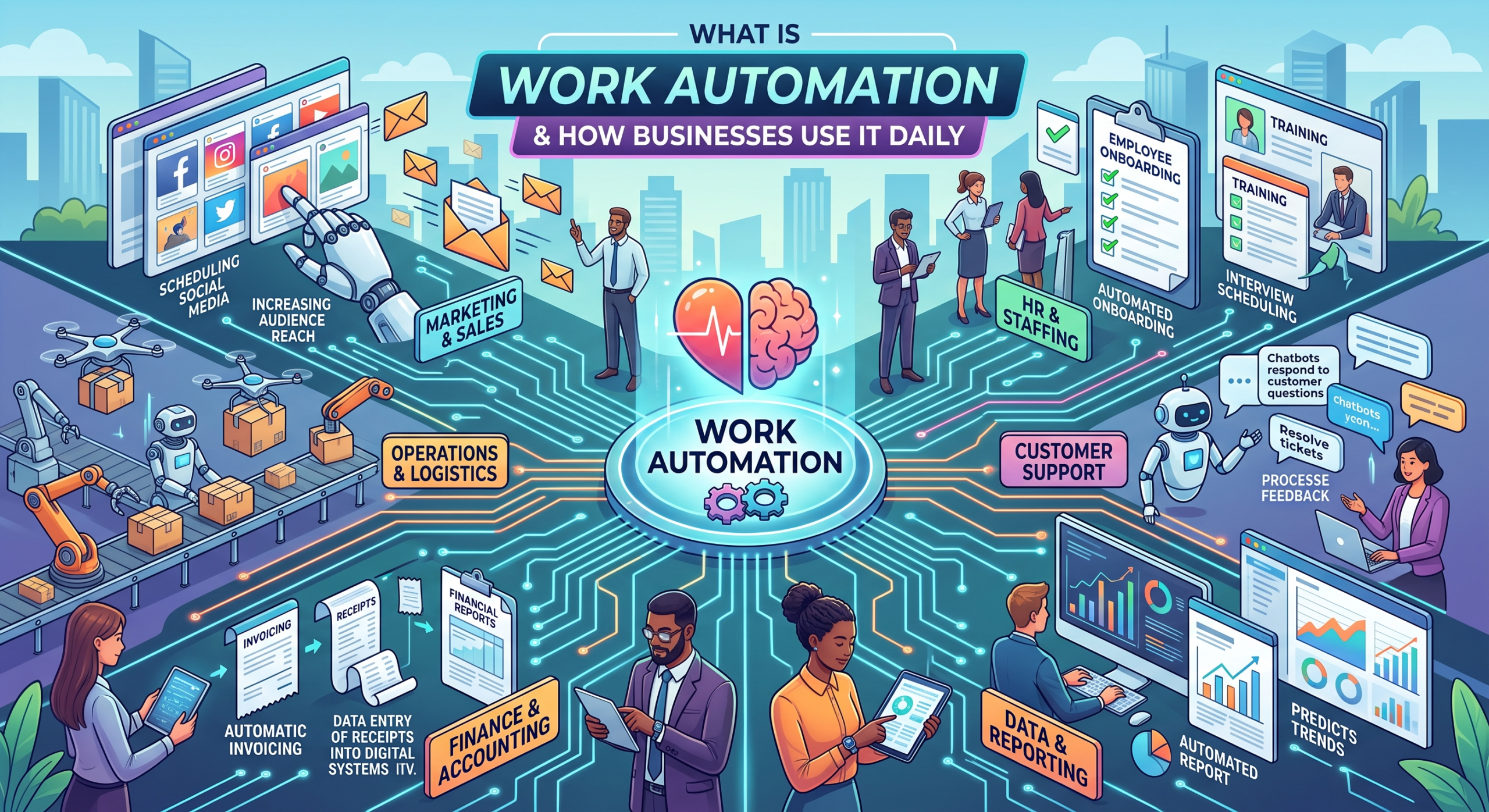
- HR Teams: AI programs check resumes, set up interviews, and send new hire documents automatically.
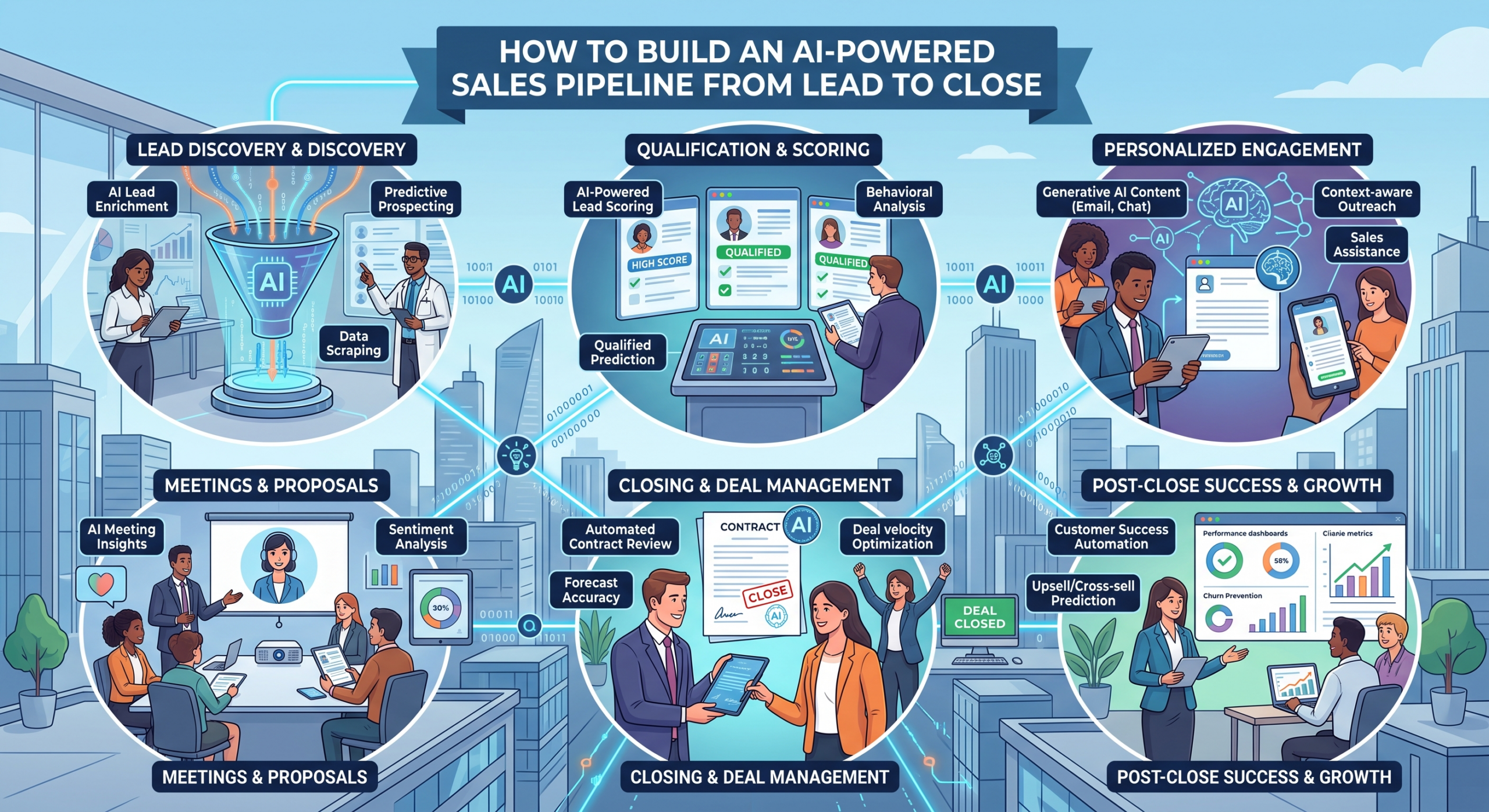
- Sales Teams: Agents keep the customer information updated, rank potential customers, and start follow-up actions, making sure every chance to sell is taken.
- Marketing Teams: Share content on social media and change the message based on what the audience is feeling at the moment.
By using AI agents to automate tasks, teams can get rid of the backlog of things to do. Gen6 Intelligence serves as the main system that lets teams without technical skills set up these agents in just a few minutes across all their technology.
Top Workflow Automation Tools
Several platforms have been used in intelligent automation. Some of these platforms are as follows:
1. Zapier
Zapier is compatible with numerous applications, but it is easy to automate processes. It helps beginners in automating their activities without necessarily understanding coding, thereby making them proficient in using technology.
2. Make
Make comes with an application where users can create workflows effortlessly through drag and drop functionalities. This makes it easy to set up complicated tasks. It provides options and personalization for businesses today.
3. UiPath
UiPath specializes in enterprise robotic process automation, helping large organizations automate repetitive tasks, improve efficiency, and scale operations using AI-driven systems across global enterprises.
4. Gen6 Intelligence
Gen6 Intelligence is an AI workflow platform enabling autonomous automation using natural language commands, reducing manual work and transforming enterprise productivity significantly today, future-ready.
Unlike traditional tools, Gen6 Intelligence focuses on end-to-end intelligent automation, not just task linking.
Real Business Benefits of AI Process Automation
AI process automation helps businesses of all sizes work better and see clear benefits.
- Time savings: Up to 60% to 80% less manual work involved.
- Accuracy: Reduce mistakes compared to manual labor.
- Scalable: Accomplish more tasks without adding staff.
- Integration: Works with various technologies for efficient interaction.
AI agents in business improve adaptability and reduce dependency on rigid systems. Adaptability remains one of the key limitations of traditional approaches. When conditions change, they fail. AI agents workflow automation solves this by continuously adjusting workflows based on real-time data.
How Gen6 Intelligence Makes It Simple
Gen6 Intelligence makes AI workflows more manageable through an intuitive process:
- Describe: Simply describe what you want your work process to look like.
- Connect: Connect existing applications, such as CRM and email.
- Launch: Start right away without needing to code.
It also has ready-made templates for things like scoring leads, ranking resumes, and automating content. This enables businesses to begin quickly and grow simply.
Conclusion
The intelligent, faster, and adaptive characteristics of AI agents will transform the approach that is taken to run business organizations. By embracing systems like Gen6 Intelligence, corporations will enjoy streamlining, saving time, and growth, all of which will signify the dawn of the intelligent business process management era.
FAQs
1. What are AI agents in workflow automation?
Autonomous software that performs tasks, makes decisions, and improves workflows without constant human control.
2. How do AI agents automate business workflows?
They analyze data, trigger actions, and adapt workflows automatically based on real-time conditions.
3. Can AI replace workflow management systems?
No, AI enhances systems by improving automation, efficiency, and decision-making, not fully replacing them.
4. What is the difference between AI agents and automation tools?
AI agents adapt and reason; automation tools follow fixed rules and predefined workflows only.
5. How are companies using AI agents in operations?
Companies use them for task automation, decision support, workflow optimization, and productivity improvement.