Most people are still using AI like a chat box where you can ask questions. But the accomplishment of goals matters much more than better conversation in 2026. Instead of just answering questions, AI helpers that can perform work are replacing those that merely respond.
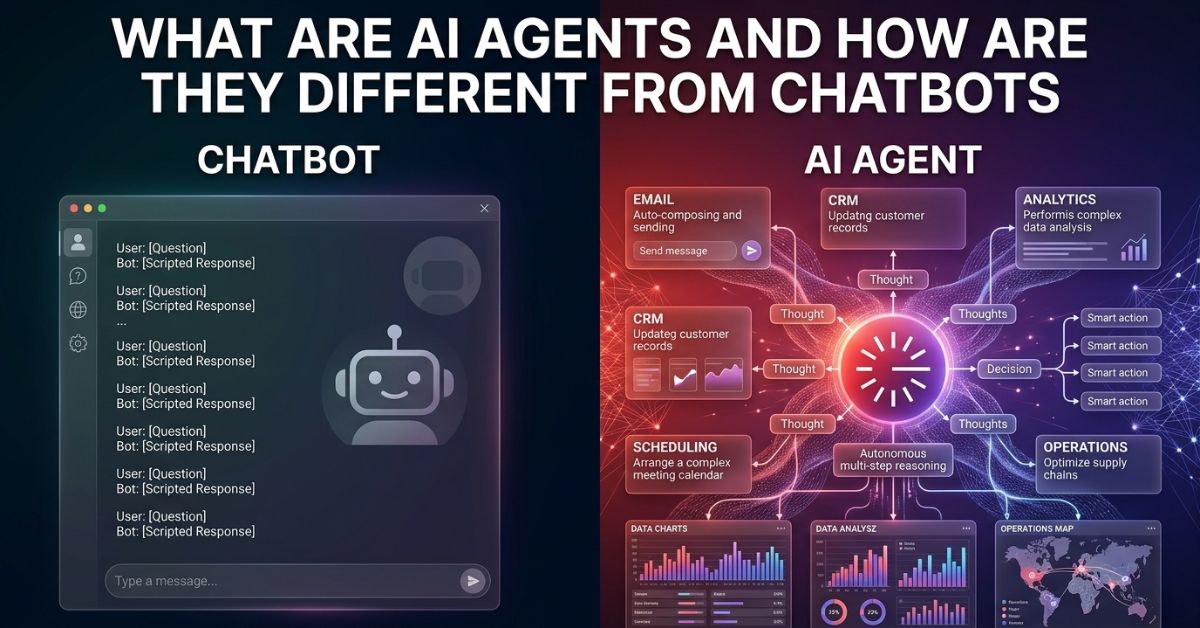
But what is an AI agent, exactly? AI agents vs chatbots are distinct concepts. While a chatbot can merely respond to inquiries related to your holiday policy, an AI agent can handle your leave application, record it into the HR software, and notify your supervisor. One party talks; the other performs the task.
What is an AI Agent?
To gain insight into what an AI agent is, we should go beyond the generation of text. An AI agent is essentially a self-running computer assistant. Unlike a normal conversational AI platform, such as a chatbot, which requires a question before generating an answer. In contrast, an agent is made to reach a specific goal.
What is an AI agent really about? Agentic AI refers to the ability of these systems to use reasoning, memory, and external tools to navigate complex paths. At Gen6, we view these AI automation agents as digital employees capable of:
- Reasoning: Figuring out the best way to achieve a particular goal based on the present situation.
- Planning: Dividing up a big task into smaller tasks (“Work with this new client”).
- Self-refining: Evaluating if what they have done is sufficient for them to move on to the next stage.
AI Agents vs Chatbots: Key Differences at a Glance
The “action gap” concept plays an important role when analyzing intelligent automation and agentic AI. Most people offer sophisticated chatbots that are effectively high-end search engines. Gen6 Intelligence focuses on AI agents that bridge the gap between “knowing” and “doing.”
| Feature | Traditional Chatbot | AI Agent (Gen6) |
| Interaction | Reactive — waits for a prompt | Proactive — pursues a set goal |
| Decision-making | Rule-based / Scripted paths | Autonomous & context-driven |
| Multi-step tasks | ❌ (One-off responses) | ✅ (Follows a chain of logic) |
| Tool/app integration | Limited (Read-only/Links) | Full-stack (Write, Edit & Execute) |
| Learning & memory | None (Resets each session) | Short + Long-term memory |
| Best for | FAQs & customer service scripts | Workflow automation & operations |
How AI Agents Work: Reasoning, Memory & Tools
When looking at AI agents vs chatbots, Agentic AI, the technology behind smart automation, is not just one type of technology but a complex system that functions much like how humans solve problems.
- The Persona: The role of the agent (“Recruitment Specialist”) and its characteristics are defined in the persona.
- The Brain: The LLM acts as the reasoning engine to process instructions and determine intent within a conversational AI platform.
- The Memory: Unlike chatbots that forget your name the moment you close the tab, Gen6 agents store historical context. They remember your preferences, previous project details, and business rules.
- The Toolset: This is what makes them “agents.” We give them access to the web, your Salesforce instance, or your company’s HR software.
What Makes Agentic AI Different From Traditional Automation?
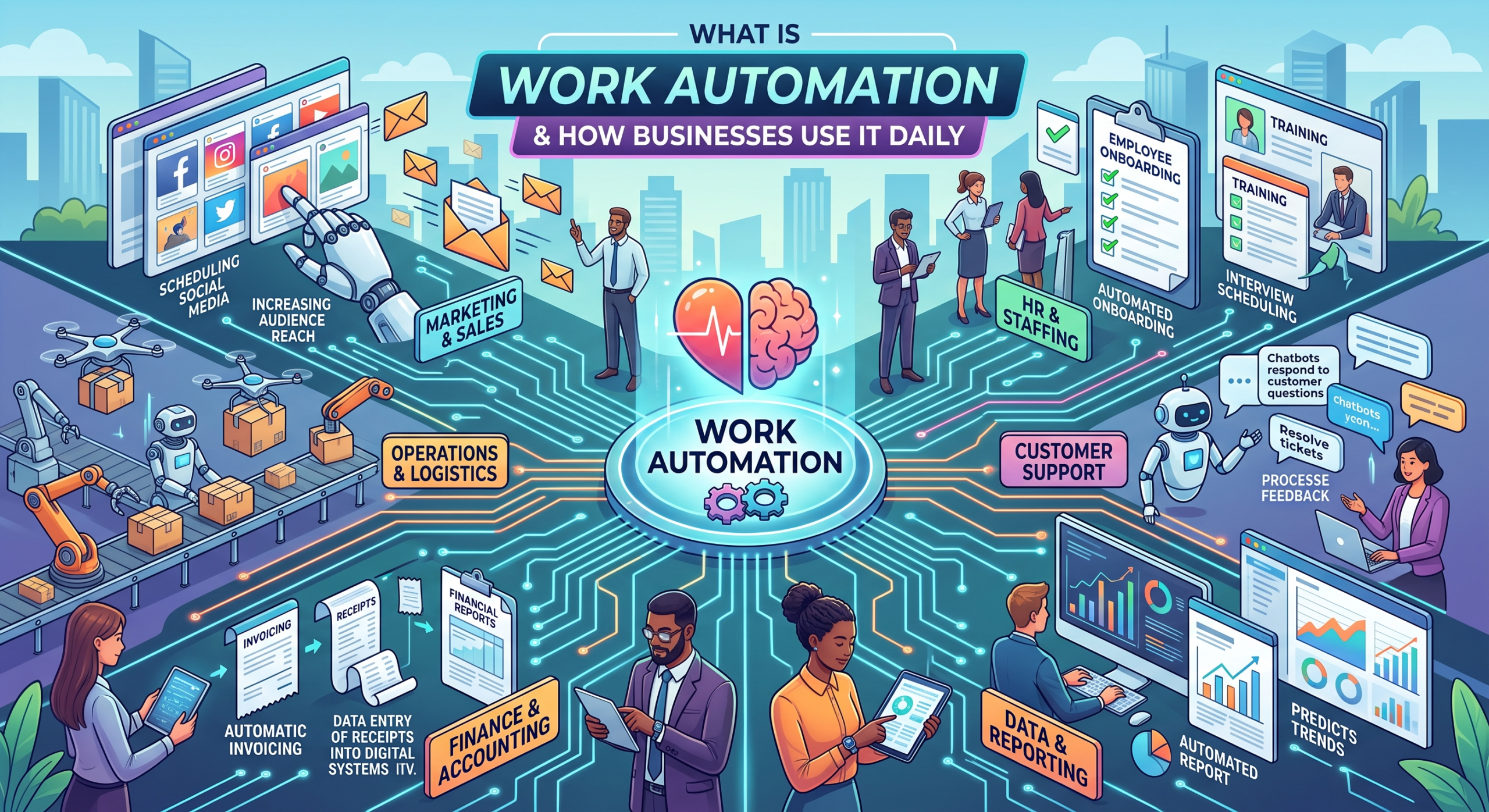
Traditional automation is like a train on a track. If there’s a rock on the tracks, the train has to stop. Agentic AI is like a self-driving car; it can avoid problems on its own. This makes it ideal for businesses looking to replace repetitive tasks with AI agents, as these systems can take over high-volume manual work that previously required human intervention.
- Handling Ambiguity: The AI automation agents can cope with ambiguity in the information and lack of instructions, as opposed to a strict approach.
- Self-Correction: The agent can repeat itself or try a new approach if an instrument does not succeed.
- Context-Awareness: The agent knows both how to accomplish the task and why he or she should do it.
- Resilience: Regardless of alterations in the software interface and minor variations in information formats, intelligent automation agentic AI has high levels of resilience.
Real-World Use Cases: AI Automation Agents in Business
Leading companies are deploying AI automation agents within our conversational AI platform to reclaim thousands of hours of productivity.
- HR Automation: Taking care of everything for an employee from when they are first considered for a job to when they leave the company.
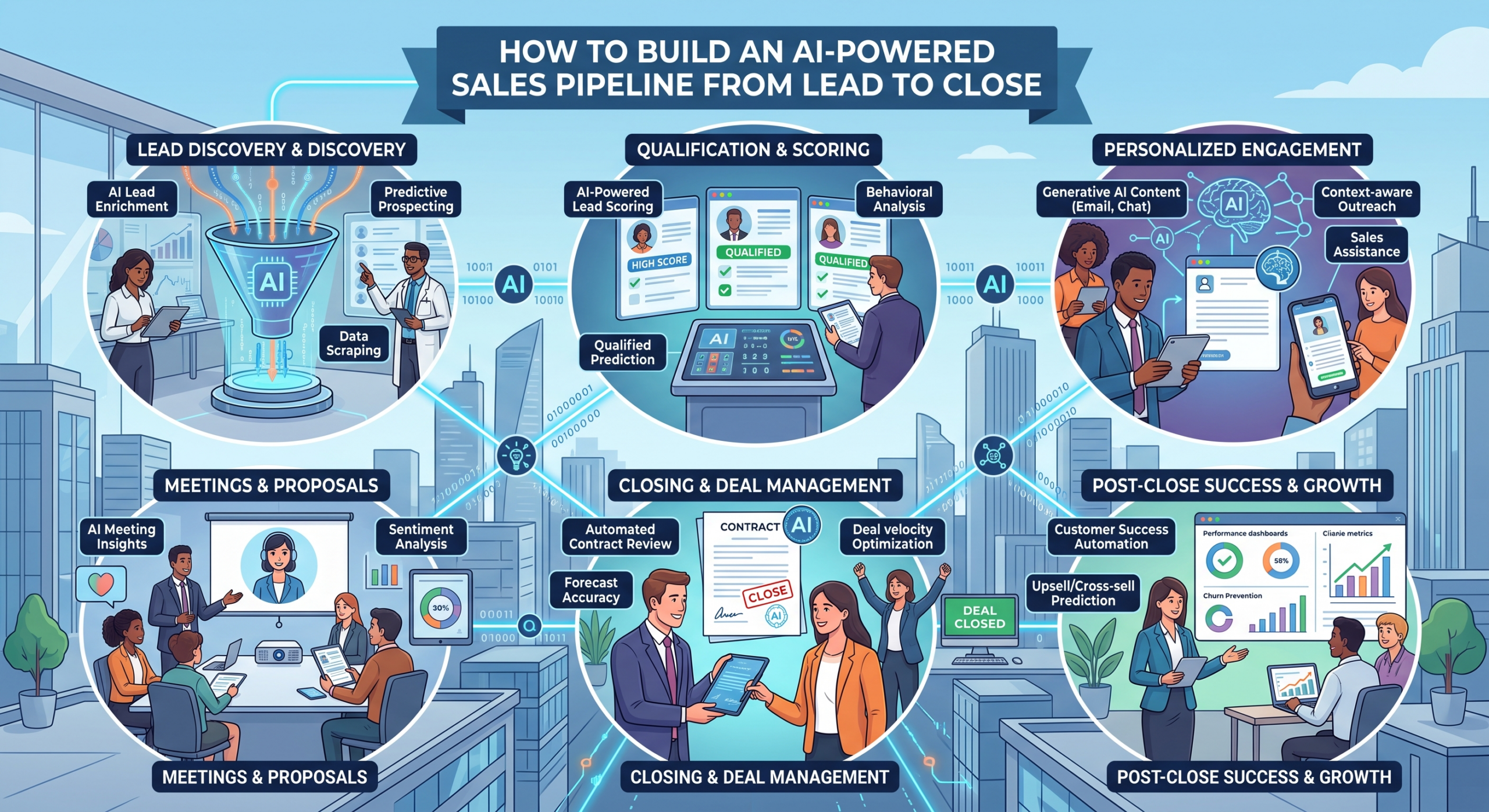
- Sales Operations: When comparing AI agents vs chatbots, sales agents excel at identifying potential clients, customizing messages for numerous people, and keeping track of leads in the CRM.
- Recruitment: Rapid identification of prospective employees and automatic scheduling of interviews in different time zones.
- Customer Operations: Using a conversational AI platform, it is not just about responding to queries; it is also about processing refunds and updating address information.
Why Gen6 Is Built on Agentic AI: Not Just Chat
Gen6 Intelligence is a conversational AI platform built for action, not just talk. We recognized early on that businesses don’t need more “chat boxes,” they need more capacity. With the shift to the future of agentic workflow automation in the industry, there is a shift in the way that platforms function, from mere interfaces to full-blown ecosystems.
- 40+ Native Integrations: Link directly to your tools, like HubSpot, Zoho, and others.
- Strong Security for Businesses: Reliable for local companies in the UAE to keep their business operations safe.
- No-Code Builder: You can create an intelligent automation agentic AI without being a programmer. If you can explain a job, you can create a helper to do it.
Conclusion
The change from chatbots to AI agents means we’re going from digital helpers to digital workers. By combining reasoning, memory, and the power to act across your software stack, Gen6 agents don’t just answer questions; they execute workflows. Embrace the future of autonomous productivity and close the “Action Gap” today.
Gen6 Intelligence is an agentic AI platform that transforms business intent into automated, end-to-end workflow execution seamlessly.
FAQs
1. What is an AI agent?
An AI agent is an autonomous digital worker that uses reasoning and tools to complete complex business goals.
2. How is an AI agent different from a chatbot?
Chatbots only provide information, whereas AI agents execute multi-step tasks and interact directly with your software stack.
3. Can AI agents work without human input?
Yes. Once given a goal, agents autonomously plan and execute steps, seeking human feedback only when necessary.
4. What tasks can AI agents automate for a business?
They automate CRM management, candidate sourcing, HR onboarding, lead generation, and complex customer support workflows.
5. Are AI agents safe for business use?
Yes. Enterprise-grade agents include strict security protocols, data encryption, and permission-based access to your company’s systems.